Advocate Newsletter
The NCPEID Advocate Newsletter is published quarterly and delivered to the NCPEID membership by email.


SUMMER 2020
Message from the President
Michelle Grenier, PhD, University of New Hampshire
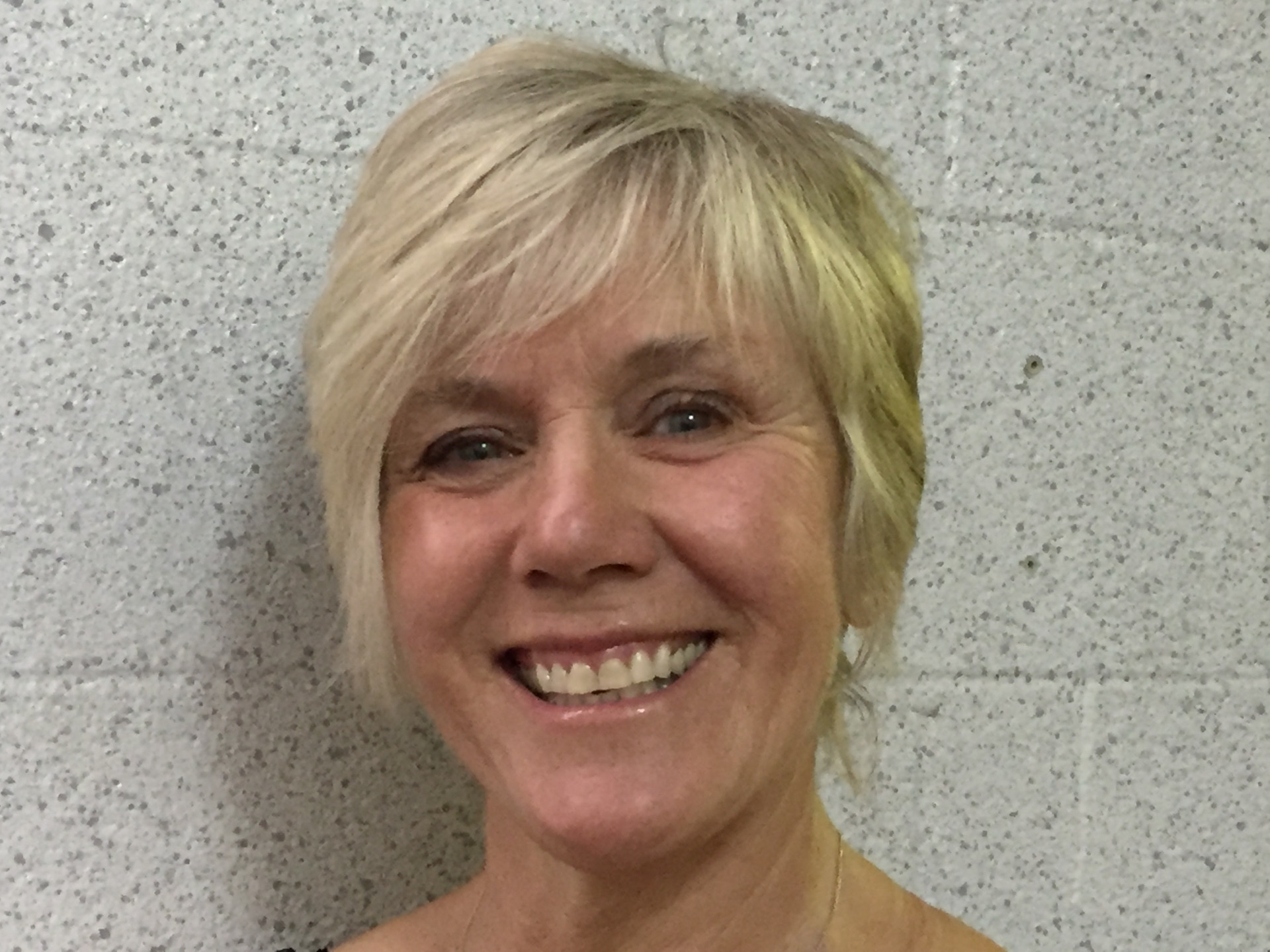
Necessity is the Mother of Invention
For all of us, this past year has been memorable for many reasons, both positive and negative. Each of us has our own experiences related to COVID and its impact on our professional and personal lives. We will walk away from these past twelve months with many lessons learned and a renewed appreciation for those who have positively contributed to our lives.
As NCPEID’s president, I learned that indeed, it does take a village to keep the organization thriving and strong. I am eternally grateful to the wisdom and calm presence of NCPEID’s former past president, Dallas Jackson, who always keep our Board of Directors meetings on track and moving forward. It also took a village to successfully run our annual conference virtually. With over 100 attendees and a dynamic line-up of presenters, NCPEID made significant strides in achieving our mission. Thanks to the conference team that included our former vice president Andrea Taliaferro and her dedicated team of Ali Brian, Amanda Young, Josie Blagrave, and Amy Oliver, our NCPEID conference was a smashing success!
The ongoing social media posts of the membership team that includes Melissa Bittner, Amanda Young, and Scott McNamara, Ben Miedema, and Heidi Ambrosius continue to impress me with their creative and informative updates on current NCPEID events. Our treasurer and president-elect, Cindy Piletic, continues to keep us honest and true to our vision as educators. Thank you Cindy. And to Erin Siebert, our secretary, many thanks for your organizational and recording skills.
This past year NCPEID hosted its first virtual research poster session under the guidance of Ron Davis, our research chair, and Andrew Colombo-Dougovito. Thanks to your ingenuity for the conference design and organization. Finally, thanks to the rest of our village, including T. Nicole Kirk for chairing the nominations and elections committee, Emily Gilbert for chairing the awards committee, Tim Davis for his ongoing work with the APENS Committee, and Suzanna Dillon and her team for advancing NCPEID’s advocacy agenda. Indeed, NCPEID is truly fortunate to have such talented and dedicated “citizens” of our village!
President's final message
Dallas J. Jackson, PhD, Slippery Rock University of Pennsylvania
It has been an honor to serve NCPEID as its 31st President. I thank all Board of Director (BOD) members, as well as, Executive Committee (EC) members whom I served alongside during my tenure as president. I also give my gratitude to past presidents, Drs. Tymeson and Dillon for their support and continued engagement in this great organization. Of course, leaders of this organization often rise from and return to its general membership, and so most importantly I thank all of the members of NCPEID and look forward to continuing to support this organization and the leaders it produces. I am excited to remain engaged, and that my first supportive role as NCPEID Immediate Past President will be to our new President Dr. Michelle Grenier.
Read Full Story: President's Final Message
Adapted Physical Education
APE Teachers Advocate to Retain Staff Positions and Services in Portland School District
Charlie Schultz, APE Teacher, Portland, OR School District;
Garth Tymeson, PhD, University of Wisconsin-La Crosse;
Suzanna Dillon, PhD, Texas Woman's University
Similar to all special education and related services personnel, adapted physical education (APE) teachers perform many roles to provide instruction and enhance results for PK-12 students with disabilities (SWD). Teaching, assessment, consulting, and collaborating with IEP team members consume a significant amount of time in the daily lives of APE professionals. Another important role is advocacy, including the always important tasks of informing and educating others regarding APE requirements and desired outcomes for SWD. It should never be assumed that all school administrators and other decision makers are aware of the physical education requirements for SWD and the benefits derived by these IDEA mandated services. This lesson was vividly learned again in the past few weeks in a large urban school district that proposed eliminating all APE teacher positions.
Can APE Practicum Still be Effective Due to COVID?
Melissa Bittner, PhD, California State University, Long Beach;
Barry Lavay, PhD, California State University, Long Beach;
Garth Tymeson, PhD, University of Wisconsin-La Crosse
The benefits of adapted physical education (APE) practicum in physical education teacher education (PETE) programs have been well documented. Researchers describe these hands-on service-learning program experiences as important components to introductory APE courses in preparing preservice teachers to work with students with various disabilities (Folsom-Meeks et al., 1999; Standal & Rugseth, 2014; Taliaferro & Bulger, 2020). Between 84 to 89% of undergraduate introductory APE courses have a practicum to supplement the in-class lecture (Piletic & Davis, 2010; Taliaferro et al., 2017). These practicum experiences can lead to changes in attitude and increased perceived level of competence in one’s ability to teach students with disabilities (Connolly 1994; Hodge & Jansma, 1999; Hodge, et al., 2002; Hodge, et al., 2003; Taliaferro & Bulger, 2020)
Read Full Story: Can APE Practicum Still be Effective Due to COVID?
Advocacy
Advocacy Efforts
Suzanna Dillon, PhD, Associate Professor, Texas Woman's University
The past few months have been busy the involvement of NCPEID in local advocacy efforts with the reinstatement of the Portland, Oregon school districts’ decision to eliminate the Adapted Physical Education. Drs. Garth Tymeson and Suzanna Dillon supported Portland School District (PSD) APE teachers as they worked to reverse the PSD School Board’s decision to eliminate the APE department and program (see section below). While, this campaign was successful in getting the APE program reinstated it was moved administratively to Physical Education from Special Education. In situations like this, APE teachers across the country will need to be diligent in reminding their administrators that: 1) APE is still a special education service; 2) their workload/”billable hours” remain a part of Special Education services; and 3) APE services must be included calculations for the local education agency in meeting the mandates of IDEA’s Maintenance of Effort (MOE).
Read Full Story: Advocacy Efforts
Calendar of Events/Engagement & Announcements
Awards Update: Recognition of Outstanding Individuals...
Katie Stanton Nichols, PhD, Indiana University of Pennsylvania University of Indiana
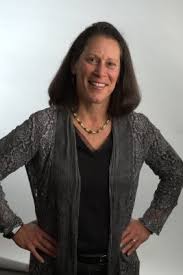
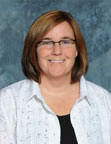
This year the following outstanding individuals were recognized by NCPEID for the efforts on behalf of individuals with disabilities. At this time, NCPEID would like to congratulate Justin Haegele, PhD, Cathy McKay, PhD, Lauren Lieberman, PhD, and Ann-Catherine Sullivan, PhD.
Read Full Story: Recognition of Outstanding Individuals in NCPEID
Resources for Practitioners & Parents
NCPEID's COVID Conversations
Michelle Grenier, PhD, University of New Hampshire; Andrea Taliaferro, PhD, West Virginia University
Over the month of June, NCPEID engaged in a series of conversations regarding the impact of the COVID-19 national emergency on our field. The conversations were intended to cover a range of topics that included directed practices from higher education faculty reaching out to students and their families, student teaching and practicum experiences during COVID-19, and instructional mediums in higher education working with preservice teachers. These conversations come in response to inquiries to NCPEID on advocacy, teaching strategies, school programming, higher education guidelines and recommendations and student need from its membership.
Read Full Story: NCPEID's COVID Conversations
Research
The Adapted Project
Andrew Colombo-Dougovito, PhD, North Texas University
Our profession has a rich and storied history that connects our collective experiences. Yet, this wealth of knowledge exists only in the published works and shared memories of its’ members. Little is known about our profession in the broader public. Without a consensus on how to define adapted physical activity, the field will always be reactive to outside influences. Though dedicated scholars, practitioners, and stakeholders continue to advocate for accessible physical activity spaces and educational experiences for individuals with disabilities—as the incident with the Portland APE program shows us—we need a broader coalition to ensure the sustainability and progression of our field. The ADAPTED Project will collect, document, and share this history. Throughout this project, a living repository will be created that provides a touchstone for the field, but is able to grow as we continue to generate knowledge.
Starting in July, I will begin the ADAPTED Project by collecting interviews from key scholars, practitioners, and stakeholders related to the field of adapted physical activity.
To Learn More About the Project: The Adapted Project
National Consortium for Physical Education for Individuals with Disabilities